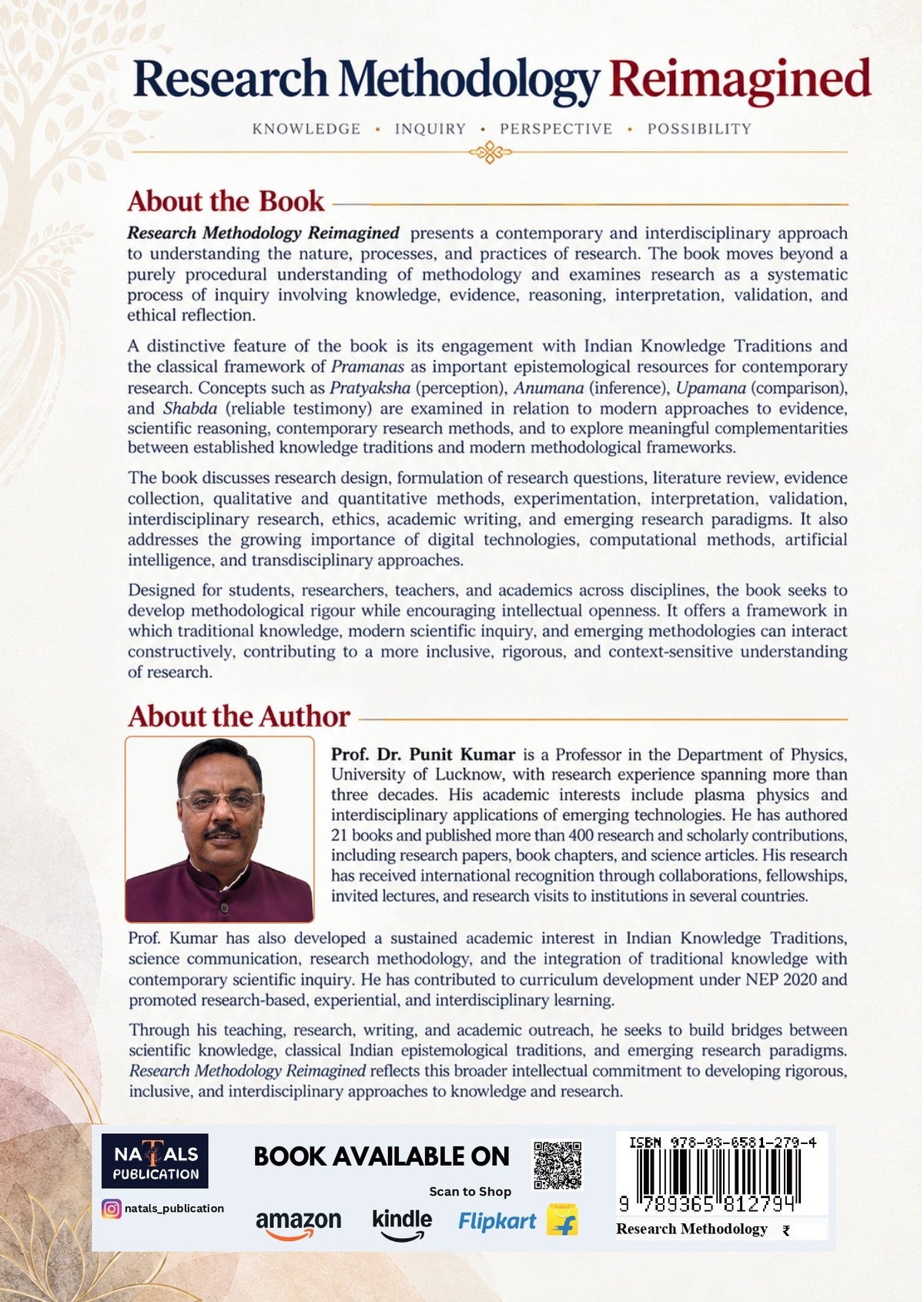
Research Methodology Reimagined presents research as a systematic and disciplined process of inquiry involving knowledge, evidence, reasoning, interpretation, validation, and ethical reflection. Moving beyond a purely procedural treatment of research methods, the book examines the intellectual foundations of research while providing extensive coverage of contemporary methodological practices.
A central feature of the book is its engagement with Indian Knowledge Traditions and the epistemological framework of Pramana. Concepts such as Pratyaksha (perception), Anumana (inference), Upamana (comparison), and Shabda (reliable testimony) are explored in relation to contemporary approaches to evidence, observation, reasoning, and knowledge validation. The book seeks constructive dialogue between classical Indian epistemological traditions and modern scientific methodology rather than treating them as competing systems.
Its coverage extends across the complete research process, including research problems, questions and hypotheses, literature review, research design, sampling, quantitative and qualitative data collection, statistical and qualitative analysis, interpretation, validity and reliability, research reporting, scholarly presentation, publication ethics, databases, research metrics, and open-access publishing.
The book also examines advanced and emerging research environments shaped by digital technologies, computational methods, artificial intelligence, machine learning, open science, interdisciplinary research, and transdisciplinary inquiry. It further explores ways of transforming traditional and indigenous knowledge claims into researchable questions, hypotheses, experimental studies, and mixed-methods investigations.
Designed primarily for students, researchers, teachers, and scholars, the book is also relevant to those working with Indian Knowledge Systems and researchers seeking rigorous, interdisciplinary, ethically grounded, and culturally informed approaches to inquiry.